Reader-Supported Journalism: A Bangladeshi Writer's Guide
Ad budgets are shrinking and editors keep leaving. A practical guide for Bangladeshi journalists building reader-funded work — pricing, trust, payments.
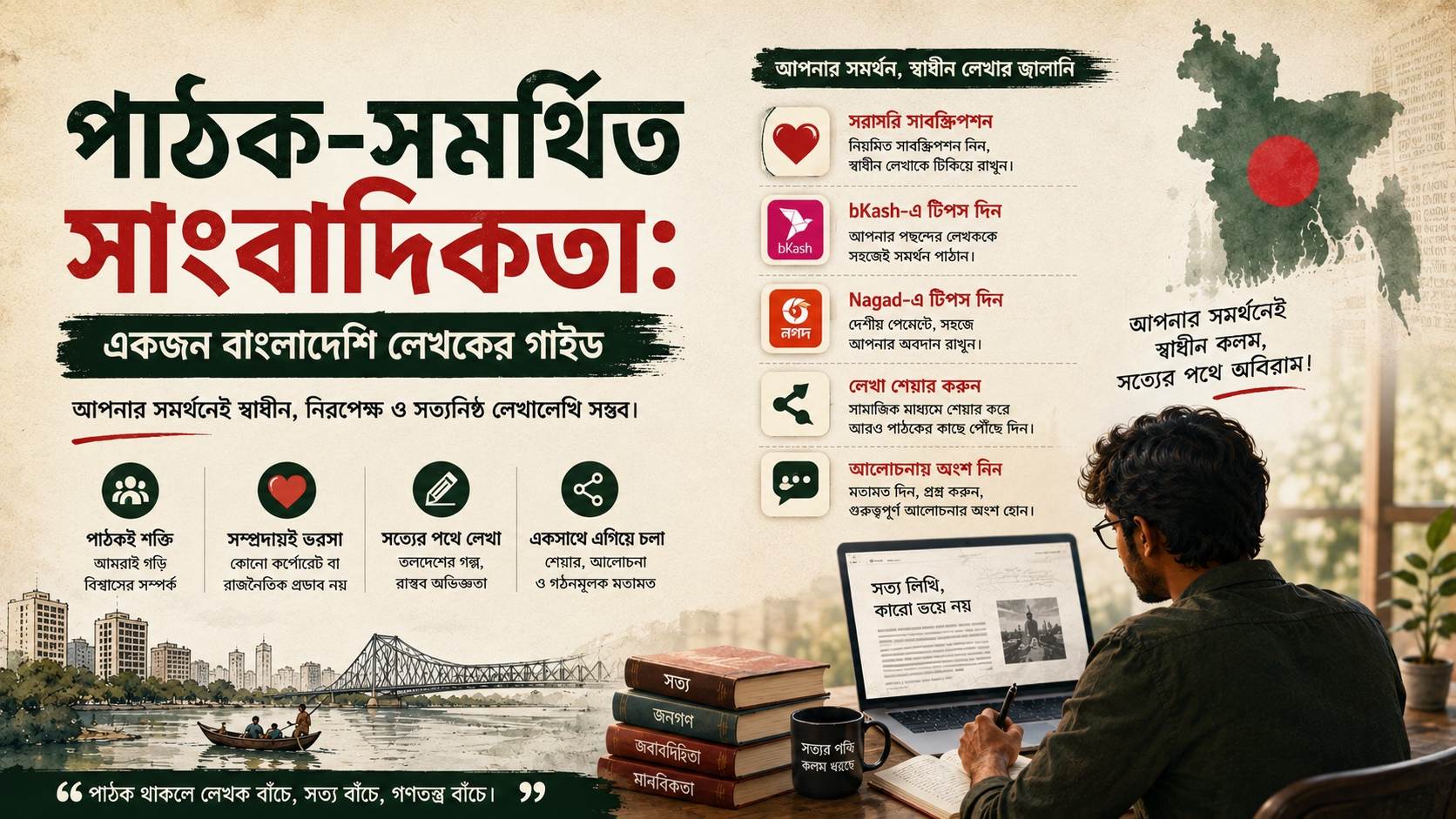
You file a story that took two weeks to report properly. Sources checked twice, a records request that finally came through. It runs next to a listicle an intern wrote in forty minutes, and both get the same ad rate. That’s not a failure of your reporting. It’s what happens when the thing paying you is attention, not the story itself.
A growing number of Bangladeshi journalists have stopped waiting for that to change and started building reader-supported journalism instead — funded by the people who actually read the work, not the ads running next to it.
Why ad money never really rewarded the work
Ad-funded media pays by the pageview, and pageviews don’t distinguish between a story that took a month of source-building and one built from a press release. Editors know this. It’s why investigative desks keep shrinking even at outlets that are, on paper, profitable — the story that takes longest to report is the least efficient one to fund with ads.
There’s a second problem specific to Bangladesh: a shrinking number of outlets means a shrinking number of editors willing to run a story that makes an advertiser or a political patron uncomfortable. Readers don’t have that conflict. Someone paying you ৳200 a month wants the story told well, not told safely.
Reader funding doesn’t fix everything. It’s slower to build than an ad-supported audience, and it caps out lower for most writers than a staff job at a large outlet would. But it changes who you’re accountable to, and for a lot of journalists who’ve watched a story get spiked, that trade is worth making.
What you need before you ask anyone to pay
- A body of published work. Readers pay writers they’ve already read, not writers who show up asking. If you don’t have a public archive yet, spend a month publishing before you mention money.
- A place that’s yours. A personal site, a Facebook page you control, or a Medium profile — somewhere a reader can find everything you’ve written in one place, independent of whichever outlet ran it last.
- One publishing rhythm you can actually keep. Weekly is fine. Twice a month is fine. What kills reader trust is going quiet for six weeks with no explanation.
- A হবে নাকি Coffee? creator account, so there’s somewhere in BDT for a reader’s support to land.
The five moves, in order
- 1
Decide what your funding actually pays for
Ongoing access to your judgment (a subscription) or a one-off nudge on a specific story (a tip). Pick a primary model before you launch.
- 2
Draw a clean line between free and paid
Public-interest reporting stays free. The deep-dive, the annotated documents, the analysis piece is what readers pay for.
- 3
Price it like a coffee, not a subscription box
Most writers start between ৳100 and ৳250 a month — low enough to be a habit, not a decision.
- 4
Prove you're legitimate before you ask for a taka
Byline history, a real name and photo, and a verified profile do more than any pitch.
- 5
Make paying frictionless
bKash and Nagad, linked where the reader is already reading — not buried on your homepage.
Step 1: Decide what your reader-supported journalism actually funds
“Support my journalism” is too vague to act on. Readers pay for one of two things: ongoing access to your judgment (a subscription, so every piece you publish is covered) or a one-off nudge on a specific story (a tip, when something you wrote actually changed how they saw an issue). Pick a primary model before you launch. Journalists who lead with subscriptions build steadier income; journalists who lead with tips build a wider, more casual base. You can add the second later — starting with both at once usually confuses readers about what they’re actually paying for.
Step 2: Draw a clean line between free and paid
The subtopic every credible reader-funded journalist in Bangladesh eventually has to answer: what’s free, and what costs money? The honest split is that anything genuinely public-interest — corruption, safety, elections, anything readers need regardless of income — stays free. Paid work is the deep-dive: the follow-up investigation, the annotated documents, the analysis piece that goes further than a daily story has room for.
Step 3: Price it like a coffee, not a subscription box
Bangladeshi readers aren’t used to paying ৳500+ a month for anything digital, and pricing there will stall you before you get ten subscribers. Most writers on this path start between ৳100 and ৳250 a month — low enough that it’s a habit, not a decision a reader has to think about each time. You can raise the price for new subscribers later; existing members typically keep what they signed up at, so early supporters aren’t punished for finding you first.
Subscriptions on হবে নাকি Coffee? run at a 0% platform fee — what a reader pays is what you receive, with no cut taken off recurring support. That’s a real, structural difference from ad revenue, where the platform and the advertiser take their share before you see anything.
Step 4: Prove you’re legitimate before you ask for a taka
This is the step most guides for other creator categories skip, and it’s the one that matters most here. A meme page asking for tips doesn’t need to prove much. A journalist asking readers to fund their reporting is asking for a different kind of trust — readers are effectively betting that you’ll keep reporting honestly with their money behind you.
Concretely: link your byline history somewhere visible, keep your creator profile under your real name and photo (not a pseudonym, unless safety genuinely requires it and you say so), and treat identity verification on the platform as a credibility signal to point to, not paperwork to get past. A reader who’s skeptical of “another guy asking for money online” is reassured by a verified account and a public record of past work more than by anything you can write in a pitch.
Step 5: Make paying frictionless
Every extra step between “I want to support this” and “done” loses readers. This is where a lot of Bangladeshi journalists lose momentum without realizing why: Patreon and similar platforms don’t take bKash or Nagad, only foreign cards, and most readers simply don’t have a Visa or Mastercard set up for recurring online charges. হবে নাকি Coffee? takes bKash and Nagad directly, so a reader can go from reading your piece to becoming a supporter in the same app they already use to pay for groceries.
Put the link somewhere a reader sees it while reading, not just on your homepage: end of the piece, your Facebook page’s About section, your pinned post. If a reader has to go looking for how to pay you, most won’t.
Step 6: Announce the shift without sounding like a pitch
The audience most resistant to a hard sell is exactly the audience most journalists have — people who read you because you don’t sound like an ad. Skip the “I need your support to keep doing this work!” post. Instead, write one piece explaining, plainly, what changes: what stays free, what becomes paid, why, and what a subscription actually funds (your time, not a platform’s margin). Readers who already trust your judgment will read that explanation the same way they read your reporting — and decide accordingly.
What happens after your first month
The first ten to twenty paying readers usually come from people who already know your work — former colleagues, regular commenters, people who’ve shared your stories before. Growth after that comes from consistency: publishing on the rhythm you promised, and occasionally naming, in public, what the paid model let you report that an ad-funded piece wouldn’t have. That’s the strongest case you can make, and it’s stronger coming as a byline than as a pitch.
If you’re already running a personal site or Facebook page and want the fuller mechanics of taking payments in BDT, How to Start a Paid Newsletter in Bangladesh walks through the setup in more detail — the payment and pricing steps apply whether you’re writing about politics or anything else. If your work already lives mainly on a Facebook Page, How to Turn Your Facebook Page Into Income covers the mechanics specific to that.
FAQ
Do I need to register a business to accept reader payments in Bangladesh?
No. Payments through হবে নাকি Coffee? run via bKash and Nagad without requiring a trade license or merchant account, so you can accept reader support under your own name.
Will readers actually pay for journalism they used to get free?
Some will, but not for the same stories. Readers pay for depth and access beyond what's freely available — the deep-dive, the follow-up, the analysis — not for public-interest reporting they'd feel wrong paying to access.
How is this different from running ads on my own site?
Ad revenue rewards pageviews regardless of how much work a story took, and it depends on advertisers who may be uncomfortable with certain stories. Reader payments reward the readers' judgment of your work directly, with no advertiser relationship to protect.
Should I use my real name if I write about sensitive topics?
Use your real name if you can — it's the strongest trust signal for a reader deciding whether to pay a journalist. If safety genuinely requires anonymity, say so explicitly rather than leaving readers to guess why your profile is unverified.
What should I charge for a subscription?
Most Bangladeshi writers building a reader base start between ৳100 and ৳250 a month — low enough to be a habit rather than a decision. You can introduce a higher price for new subscribers later without changing what existing members pay.
The outlets that used to fund investigative work aren’t coming back to full strength anytime soon. Readers who’ll pay for reporting they trust already exist — the only real question left is whether you’ve made it easy enough for them to say yes.